
France, a country renowned worldwide for its gastronomy and refined lifestyle, has always boasted an exceptionally high ceiling for its chocolate market. Establishing a cocoa processing plant in France not only means access to top-tier raw material suppliers and discerning consumers, but also means your brand will be branded with a “quality” label. However, building an industrial production line from scratch in France is no easy feat. This article will break down the entire factory construction process in detail and provide an in-depth analysis of the core factor determining product quality—cocoa processing equipment.
Step 1: Sharpening the Axe Before Chopping Wood—Market Research and Business Plan
While discussing business over coffee on the banks of the Seine is certainly romantic, rigorous business logic is the cornerstone of success.
Market Research: First, you need to conduct in-depth research on the French chocolate market. Do the French prefer high-cocoa-content dark chocolate or milk chocolate that emphasizes texture? Where are your upstream suppliers? Will you import cocoa beans directly from West Africa, or cooperate with local French raw material distributors? Understanding these “tastes” and “channels” is the first step.
Business Plan: Develop a detailed business plan covering financial projections, production costs, funding sources, and a SWOT analysis. France’s accounting and tax system is complex; consulting a local certified public accountant (Expert-Comptable) is essential.
Step Two: Establishing a Foothold – Site Selection, Funding, and Licenses
Funding: In France, besides traditional bank loans, you can consider utilizing French government subsidies for “industrial revitalization” and “job creation,” or obtaining start-up capital through European crowdfunding platforms.
The Art of Site Selection: After securing funding, site selection is crucial. An ideal site should have well-ventilated factory buildings and be close to transportation hubs (such as the Port of Le Havre) for rapid raw material imports. Proximity to major consumer markets (Paris, Lyon, etc.) helps reduce logistics costs.
Compliance: Obtain all necessary licenses, especially those issued by the health authorities. France has extremely stringent food hygiene requirements; your production processes must comply with EU food standards.
Step 3: Core Driving Force – Unveiling the Core Equipment of a Cocoa Processing Plant
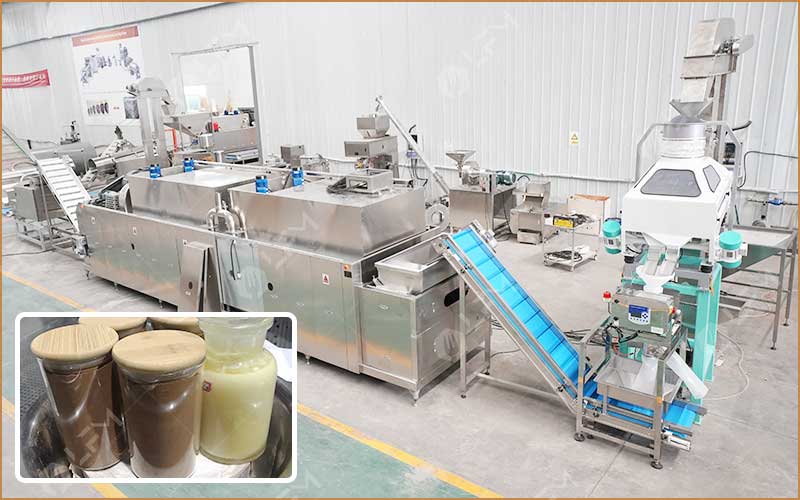
Once the factory site is selected and funding is secured, equipment procurement becomes a crucial factor determining product competitiveness. Cocoa processing is not a simple process; it’s a remarkable journey from coarse pods to fine powder. Here are the core equipment lines you need to know:
- Cleaning and Roasting Equipment: Before entering the production line, cocoa beans need to be cleaned. Then, the cocoa roasting machine comes into play. Roasting is key to determining chocolate flavor, bringing out the deep aroma of the cocoa beans through the Maillard reaction.
- Peeling and Separation Equipment: After roasting, the cocoa beans need to have their shells removed. Modern factories often use cocoa bean peeling machines, which use the friction of rubber rollers to break the beans, and then use an air separation system to separate the lighter and heavier shells from the cocoa kernels (Nibs). Advanced production lines even integrate vibrating screens and shell suction devices, achieving fine sorting of different varieties of fruit by adjusting the screen angle and air inlet height.
- Coarse and Fine Grinding: The purified cocoa kernels enter the cocoa grinder. The cocoa powder is ground into a fine cocoa paste (also known as cocoa liquor) using grinding discs or heads inside the machine.
- Oil Extraction: If you need to produce cocoa powder, then the oil extraction process is essential. A hydraulic oil press uses immense hydraulic pressure to extract the precious cocoa butter from the cocoa liquor; the remaining solid part is the cocoa cake.
- Crushing and Grinding: The pressed cocoa cake then undergoes processing in a cocoa cake crusher and a cocoa powder grinder. Through the high-speed relative motion of a moving and fixed toothed disc, it is impacted and rubbed into the final brownish-red powder.
Establishing a cocoa processing plant in France is a journey that combines business ambition with culinary culture. From market research to equipment selection, every step requires careful planning. Investment in core processing equipment, in particular, directly determines the upper limit of your product’s potential.
Whether you choose a high-capacity, fully automated production line or a smaller facility focused on craft brewing, remember: quality equipment is fundamental to your success in this romantic country. Hopefully, this guide will help you cultivate your own unique flavor on French soil.