
For those who are deeply passionate about chocolate, the dream often goes beyond simply making a few artisanal treats in a home kitchen. For many, the ultimate goal is to scale that passion into a full-fledged operation—to become a professional chocolate manufacturer. This means moving into the world of production lines, supply chain logistics, and commercial distribution. If you are ready to turn your love for chocolate into a manufacturing enterprise, here is a guide to launching your own chocolate factory.
Step 1: Build a Foundation in Industrial Chocolate Production
Before you can manufacture chocolate at scale, you must understand it at a molecular and mechanical level. While artistry is important, commercial manufacturing requires a deep knowledge of food science and production efficiency.
Step 2: Develop a Comprehensive Business Plan
Transitioning from a craftsman to a factory owner requires a robust business plan that goes beyond a simple budget. In the manufacturing world, your business plan must address volume, scalability, and market positioning.
Your plan should include:
- Capital and Funding: Factory equipment is expensive, and production spaces require significant upfront investment. Outline your funding strategy—whether through small business loans, investors, or personal capital. Include detailed financial projections for at least three to five years.
- Production Model: Define your niche. Will you be a bean-to-bar manufacturer, importing raw cocoa beans and processing them entirely in-house? Or will you be a chocolate converter, purchasing bulk couverture chocolate to create confections, bars, and other products? Each model has different equipment requirements and cost structures.
- Distribution Channels: Unlike a small boutique, a factory relies on volume. Will you sell business-to-business (B2B) to restaurants, hotels, and retailers? Will you focus on private-label manufacturing for other brands? Or will you build a direct-to-consumer (DTC) e-commerce empire? Your business plan must clearly define your sales strategy.
Step 3: Secure a Suitable Production Facility
The location and layout of your factory are critical to your success. Unlike a retail shop, a manufacturing facility is designed for workflow efficiency, safety, and regulatory compliance.
When searching for a space, consider the following:
- Size and Scalability: Choose a space that accommodates your current production needs but allows room for growth. Moving a factory is expensive, so planning for expansion is wise.
- Utilities and Infrastructure: Chocolate manufacturing requires strict climate control. Your facility must have reliable heating, ventilation, and air conditioning (HVAC) systems to maintain temperatures between 16–18°C (60–65°F). Humidity control is equally important to prevent sugar bloom and fat bloom.
- Regulatory Compliance: In most regions, food manufacturing facilities must meet strict health and safety standards. Ensure the space can be easily adapted to meet Good Manufacturing Practices (GMP) and Hazard Analysis Critical Control Points (HACCP) certifications.
Step 4: Invest in and Install Specialized Equipment
The equipment in a chocolate factory is the backbone of your operation. While a small chocolatier might use a tabletop tempering machine, a manufacturer requires industrial-grade machinery that can handle hundreds or thousands of kilograms per day.
Key equipment includes:
- Bean Processing Equipment (for bean-to-bar): If you are starting from the bean, you will need cleaning equipment, roasters, winnowers (to crack and separate nibs from shells), and industrial melangers or ball mills to grind and refine chocolate for days at a time.
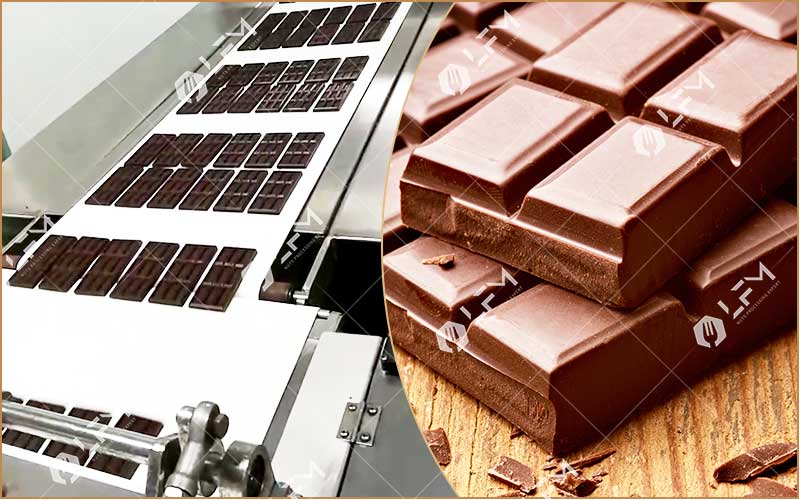
- Chocolate Tempering and Molding Lines: Industrial tempering machines ensure that large volumes of chocolate are perfectly crystallized. Automated molding lines, depositors, and cooling tunnels allow for consistent production of bars and bonbons.
- Enrobing and Packaging Lines: For confectionery production, enrobing machines coat centers efficiently. Packaging is the final critical step; automated flow wrappers, cartoners, and labeling machines ensure product freshness and shelf appeal while reducing labor costs.
- Storage and Logistics: Temperatures can drop suddenly in chocolate storage, so investing in a climate-controlled warehouse area is essential.
Step 5: Establish a Reliable Supply Chain
For a factory, consistency is king. You cannot afford to have fluctuations in raw material quality or availability. Securing reliable suppliers is therefore one of the most important steps in your journey.
Your supply chain will include:
- Cocoa Products: Whether you are sourcing raw beans from cooperatives in West Africa or South America, or buying bulk couverture from major suppliers like Valrhona, Callebaut, or Cacao Barry, you must establish long-term contracts to ensure price stability and consistent quality.
- Additional Ingredients: Sugar, milk powder, cocoa butter, nuts, emulsifiers (such as soy lecithin), and flavorings must all meet your quality specifications. For premium positioning, consider organic, Fair Trade, or Rainforest Alliance certified ingredients.
- Packaging Materials: In manufacturing, packaging is a major cost center. You will need to source primary packaging (the wrap that touches the chocolate), secondary packaging (boxes and sleeves), and shipping cartons. Sustainable packaging options are increasingly important for modern brands.
Step 6: Market Your Manufacturing Business
Marketing for a chocolate factory is different from marketing a retail chocolate shop. Your customers may include business clients, distributors, and retailers, in addition to end consumers.
- B2B Branding: Develop professional sales materials that highlight your production capacity, quality standards, and reliability. Attend food industry trade shows such as ISM (in Cologne) or the Specialty Food Association Fancy Food Shows (in New York and San Francisco) to connect with buyers and distributors.
- Private Label Services: If you offer private-label manufacturing, market your ability to create custom recipes and packaging for other brands. This can be a highly profitable segment of the business.
- Consumer Marketing: Even if you sell primarily B2B, a strong consumer brand helps drive demand. Invest in a professional website, e-commerce capabilities, and social media presence. High-quality photography of your factory process can build transparency and trust.
- Certifications and Storytelling: In today’s market, certifications matter. Obtaining organic, non-GMO, Fair Trade, or Direct Trade certifications can differentiate your factory. Tell your story—whether it’s about ethical sourcing, local manufacturing, or innovative flavor profiles—to build an emotional connection with your customers.
Conclusion
Launching a chocolate factory is a monumental undertaking that requires far more than a passion for sweets. It demands technical expertise, strategic financial planning, a commitment to quality control, and the ability to manage complex logistics. Yet, for those who succeed, the rewards are extraordinary. There is a unique satisfaction in seeing your products on store shelves, knowing that you have built an enterprise from the ground up—an enterprise that brings one of the world’s most beloved foods to people at scale. By following these steps and staying dedicated to both quality and consistency, you can transform your passion for chocolate into a thriving manufacturing business.