
Chocolate is one of the most popular food products worldwide, but few people understand the complex journey behind every chocolate bar. From raw cocoa beans to finished chocolate products, a series of processing steps for transforming cocoa beans into chocolate are required to develop the unique flavor, aroma, and texture that consumers expect.
A successful chocolate production process depends not only on high-quality cocoa beans but also on the right processing technology and equipment. For chocolate manufacturers, selecting suitable cocoa processing equipment is essential to improve production efficiency, maintain consistent quality, and meet different market demands.
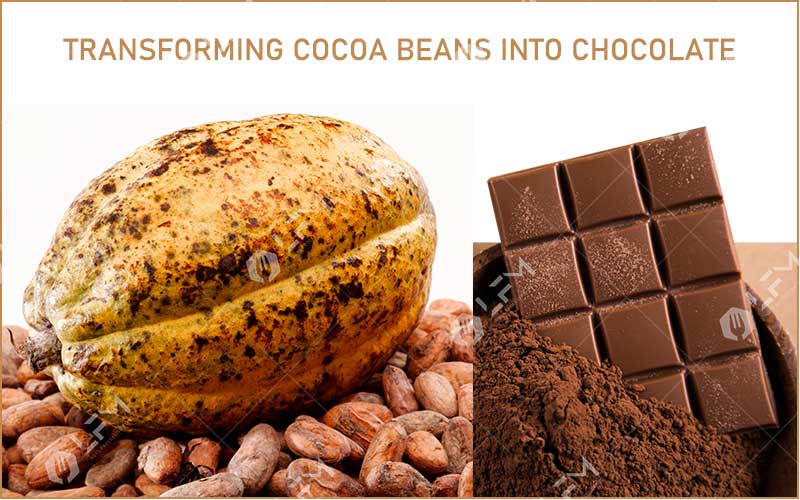
The Basic Process of Cocoa Transformation into Chocolate
The transformation of cocoa beans into chocolate involves several important stages, including roasting, grinding, mixing, refining, conching, and molding. Each step has a specific purpose and directly affects the final quality of chocolate.
- Cocoa Bean Roasting Equipment
Roasting is one of the most important steps in cocoa processing. During this stage, raw cocoa beans are heated at controlled temperatures to remove moisture and develop the characteristic chocolate aroma.
A well-controlled roasting process helps enhance flavor compounds while reducing undesirable bitterness. Industrial chocolate manufacturers usually use professional roasting equipment to ensure uniform heating and stable production.
- Cocoa Grinding and Liquor Production
After roasting, cocoa beans need to be cracked, separated, and ground into cocoa liquor (also called cocoa mass).
The grinding process reduces cocoa particles and releases cocoa butter naturally contained in the beans. The resulting cocoa liquor becomes the basic ingredient for producing chocolate, cocoa powder, and other cocoa-based products.
Efficient grinding technology is important because particle size directly influences the smoothness and mouthfeel of the final chocolate.
- Chocolate Mixing and Ingredient Blending
Once cocoa liquor is prepared, manufacturers combine it with other ingredients according to their chocolate recipes.
Common ingredients include:
Sugar
Milk powder
Cocoa butter
Vanilla or other flavorings
During this stage, a chocolate mixer helps achieve a uniform distribution of ingredients and creates a consistent chocolate mixture.
Different chocolate products require different formulas, such as dark chocolate, milk chocolate, white chocolate, and filled chocolate products.
- Refining and Improving Chocolate Texture
Chocolate refining is a key step for achieving a smooth and delicate texture.
During refining, large cocoa and sugar particles are reduced to very small sizes. This process improves the mouthfeel of chocolate and eliminates a rough or grainy sensation.
For commercial chocolate production, advanced refining technology allows manufacturers to achieve stable quality while increasing production capacity.
- Conching: Developing Flavor and Smoothness
Conching is a traditional but essential chocolate processing step.
During conching, chocolate paste is continuously mixed and heated for several hours. This process helps remove unwanted moisture and acidic flavors while improving the aroma and texture of chocolate.
A high-quality conching process can significantly influence the final taste of chocolate, which is why conching equipment is widely used in professional chocolate factories.
- Chocolate Molding and Final Product Formation
After processing, liquid chocolate is transferred into molds to create different shapes and sizes.
Chocolate molds allow manufacturers to produce various products, including:
Chocolate bars
Chocolate pieces
Chocolate candies
Customized chocolate products
The molding process is usually combined with cooling systems to ensure proper chocolate crystallization and a glossy appearance.
Why Modern Chocolate Processing Equipment Matters
As the global demand for chocolate continues to grow, manufacturers need efficient solutions to increase production capacity while maintaining product quality.
Modern chocolate processing equipment provides several advantages:
- More stable production performance
- Better control of chocolate quality
- Reduced manual labor requirements
- Higher production efficiency
- Improved hygiene standards
For small chocolate workshops and large industrial factories, choosing the right equipment configuration is an important factor in building an efficient production system.
Building an Efficient Cocoa-to-Chocolate Production Process
A complete chocolate production process requires cooperation between different machines and processing stages. From cocoa bean preparation to final chocolate shaping, every step influences the quality of the finished product.
Manufacturers should consider factors such as production capacity, product type, automation level, and investment budget when planning their chocolate production line.
With suitable processing technology and professional equipment, cocoa producers can transform high-quality cocoa beans into premium chocolate products that meet consumer expectations.